Why Sambhajinagar deserves a spot on your India itinerary
Sambhajinagar, historically known as Aurangabad, sits at the confluence of art history, medieval military strategy, and thriving contemporary craftsmanship. It is one of those rare Indian destinations where the sheer range of heritage in a compact radius makes travel both efficient and deeply rewarding. In one day you can stand before massive monolithic shrines carved from living rock at Ellora, trace the evolution of Buddhist mural painting at Ajanta, and still have time to savor a slow-cooked Deccan meal. The city’s location in Maharashtra places it within a broad network of rail and road connections while its relatively moderate pace—compared to India’s mega-cities—makes it easier to navigate, especially for first-time visitors to the country.
Travelers are drawn by UNESCO sites, but what often seals their affection for Sambhajinagar is the texture of daily life: weavers throwing the shuttle for lustrous Paithani and Himroo fabrics, coppersmiths shaping Bidriware in tiny workshops, and elders pausing at sundown tea stalls where conversations run as long as the daylight. The city is large enough to host comfortable hotels, dependable transport, and varied cuisine, yet small enough that you can orient yourself quickly. Seasoned India hands appreciate the balance: the density of heritage without the fatigue of urban sprawl.
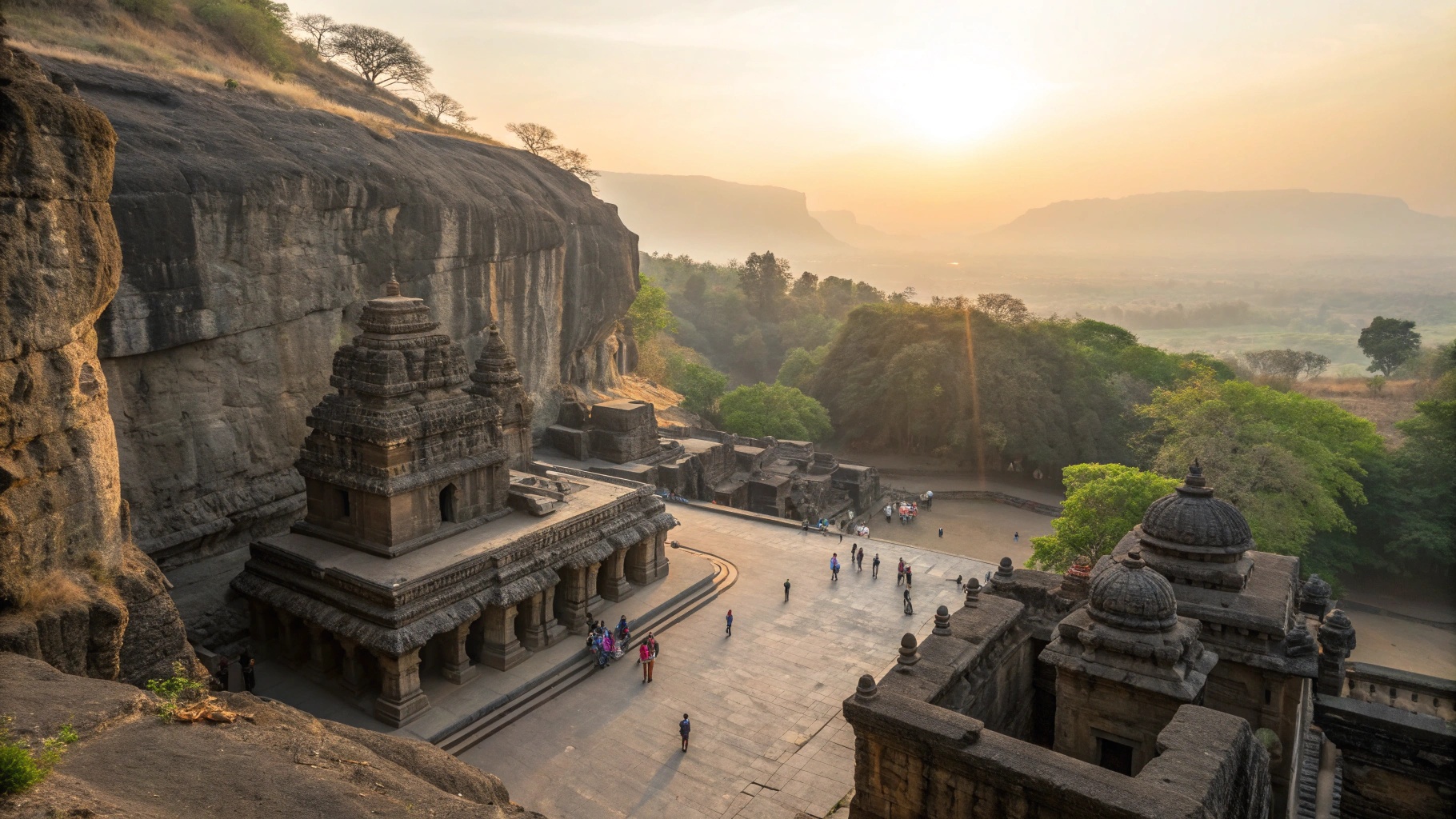
The region’s story is layered. Long before it became a Mughal stronghold and a Maratha-era node, this Deccan plateau nurtured Buddhist monastic networks that left an extraordinary record in stone. Ellora’s Kailasa temple is an engineering and artistic marvel: a single rock face cut from the top down, sculpted into a complete Dravidian-style temple complex. Ajanta, older and more secluded, arcs along a horseshoe-shaped gorge where caves preserve the subtleties of classical painting—a vivid account of faith, royal patronage, and daily life between the 2nd century BCE and 6th century CE. Later centuries added fortresses, gardens, and a cosmopolitan culinary mix. In Sambhajinagar, India’s epochs don’t just follow each other—they coexist within easy reach.
Geographically, Sambhajinagar sits in a rain-shadow region of the Western Ghats. The climate swings from pleasantly cool winters to warm, dry summers with a monsoon that is milder than coastal Maharashtra. This means winter (November–February) is the prime season for outdoor exploration, though shoulder months—especially late September to October and March—can be excellent for those who prefer quieter sites and better hotel rates. Summer visits are possible with early starts, indoor breaks during midday heat, and sunset returns to the monuments. The relative dryness of the monsoon here also means fewer washouts and more consistent transport, an underappreciated logistical advantage.
For many visitors, Sambhajinagar is also serviceable as a base for the wider Marathwada region. You can day-trip to Paithan on the Godavari for the Paithani weaving tradition, visit the spiritual center in Grishneshwar with its Jyotirlinga temple adjacent to Ellora, and add detours to Khuldabad’s Sufi shrines. The radius of interest expands quickly once you realize how much sits within 100 kilometers. Yet the city itself rewards lingering: neighborhood walks reveal Indo-Islamic gateways, lively chowks, and food streets where the aroma of slow-cooked nihari, fragrant tahri, and flaky parathas competes with the sweetness of seasonal fruits.
To help you plan smartly, this guide is organized for clarity. If you want a greatest-hits overview, head to Top Attractions. Curious about festivals, fabrics, and what to eat? See Culture & Cuisine. Looking for transit, costs, safety, and sample itineraries? Open the Travel Guide. And if you need personal assistance or media inquiries, reach out via the Contact page. Wherever you land, you’ll find practical, field-tested advice rather than generic boilerplate.
Highlights at a glance
UNESCO heritage, up close
Ellora’s cave complex arrays Buddhist, Hindu, and Jain monuments across a two-kilometer escarpment, a visible reminder of religious coexistence and royal patronage through centuries. Ajanta, a separate site about 100 kilometers away, holds jewel-like paintings describing Buddhist Jataka tales, courtly life, and nuanced human emotion. Visiting both is not just a checklist task; it’s an immersion in how ideas traveled and transformed across the subcontinent.
Fortress strategy in stone
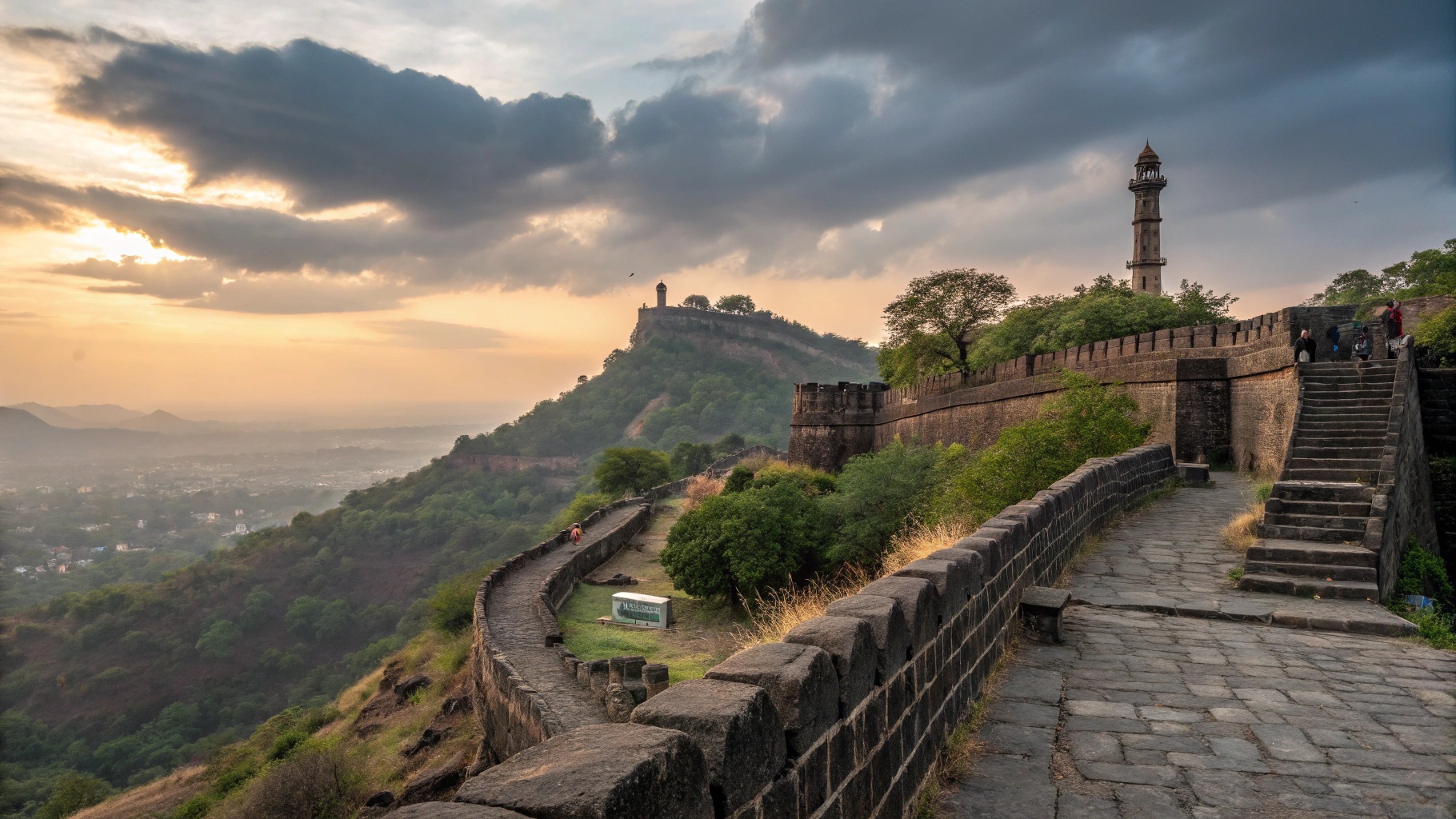
Daulatabad (Devgiri) Fort compresses every trick in the medieval defensive playbook—maze-like entrances, spiked gates, pitch-dark passages, and steep climbs—into a hillside stronghold with sweeping Deccan views. Start early, carry water, and pace yourself. The climb is as instructive as it is exhilarating.
Living crafts you can visit
The region’s weaving heritage is alive in Paithan and city workshops where Himroo and Paithani textiles are still produced on handlooms. Respect the time it takes to produce a sari or shawl: designs can require months of synchronized labor. Many studios welcome visitors; buying directly supports continuity.
Deccan flavors and hospitality
Influences from Mughal kitchens, regional Maratha traditions, and the geography of the Deccan plateau produce a distinctive table: slow-cooked meats, fragrant rice dishes like tahri, breads from tandoor and griddle, and seasonal vegetables brightened with spice. Vegetarian travelers will find abundant options; non-vegetarians can seek out specialty nihari and kebabs. Hydrate well and ask for spice preferences—locals are happy to guide you.
Practical planning: seasons, transport, and neighborhoods
Seasonality shapes your itinerary. Winter is ideal for full-day excursions; bring layers for cool mornings and evenings. In shoulder months, plan Ajanta as a day trip with an early departure to maximize time at the site museum and viewpoint. Ellora pairs well with Grishneshwar Temple and a late lunch in Khuldabad or back in the city. Monsoon greenery can make the rock-cut façades appear even more dramatic, though slippery steps demand care. In summer, prioritize sunrise at Ellora, a shaded lunch, and sunset at Bibi ka Maqbara or the Aurangabad Caves.
Transport is straightforward. The city offers auto-rickshaws, app-based taxis, and reliable private drivers for day trips. Trains connect to Mumbai, Pune, Hyderabad, and beyond, while the airport provides domestic links. If you’re combining Sambhajinagar with the Western Ghats or coastal Maharashtra, buses and overnight trains can be efficient; check schedules ahead of festivals when demand spikes.
Accommodations run the gamut from business hotels to heritage-style stays and homestays. Aim for locations that reduce transit time to your priority sites. If you plan multiple early starts, a central base can save energy; if you prefer calmer evenings, look slightly outside the dense core. Food neighborhoods emerge naturally as you explore—don’t hesitate to ask shopkeepers where they eat.
Budgeting is manageable. Entry fees at major monuments are reasonable by international standards, and guides offer good value when hired at site gates—ask to see their official ID. Food can be as affordable as street snacks or as elaborate as slow-cooked feasts. Allocate for crafts if textiles or metalwork are of interest; high-quality pieces reflect both materials and time, and are treasured long after a trip ends.
Finally, safety and respect. Sambhajinagar is generally welcoming and safe with normal urban precautions. Dress for the heat and for temple visits where modesty is appreciated. Remove shoes where required; photography rules vary by site—signs will indicate restrictions. Above all, treat living traditions with curiosity and care: many of the skills you’ll witness are the result of generational patience and pride.
Frequently asked questions
How many days do I need? With two full days you can see Ellora, Daulatabad, Bibi ka Maqbara, and the Aurangabad Caves. With three to four, add Ajanta, craft visits, and an unhurried food exploration. A week allows deeper neighborhood walks and day trips to Paithan and Khuldabad.
Is a guide necessary? Not strictly, but a licensed guide can illuminate details easily missed—especially at Ajanta where painting iconography benefits from context. At Ellora, stories woven through Hindu, Buddhist, and Jain spaces come alive with a knowledgeable companion.
What about families? Kids tend to love forts and caves. Carry water, hats, and snacks; intersperse active climbs with shaded rests. Many hotels can arrange early breakfasts for day trips.
Can I visit year-round? Yes, with planning. Winter is best; monsoon is scenic; summer demands smart pacing. The city’s relative dryness compared to coastal regions makes disruptions less likely.
A brief timeline to orient your visit
The layered story of Sambhajinagar is easier to appreciate with a simple time-map in mind. Early Buddhist activity (circa 2nd century BCE onwards) forms the backdrop to Ajanta’s development, whose painting programs matured through the Satavahana and Vakataka periods. Centuries later, Ellora’s explosive phase (7th–10th centuries CE) unfolded under the patronage of the Chalukyas and Rashtrakutas, resulting in a rare adjacency of Buddhist, Hindu, and Jain monuments. Medieval Deccan politics then pulled power across nearby hill forts—Daulatabad crucial among them—while the Mughal and Maratha periods overlaid new architectural and culinary preferences. The 17th century introduced garden-memorials like Bibi ka Maqbara. This compressed heritage arc—pre-classical, classical, medieval, early modern—sits within day-trip range, which is why travelers repeatedly describe Sambhajinagar as one of the most “efficient” culture trips in India.
When you visit, hold this timeline loosely and let sites recalibrate your sense of duration. In Ajanta’s dim halls, paint breathes across centuries as if time paused for pigment to settle. At Ellora, monolithic audacity makes decades of labor feel like a single coordinated gesture. On Daulatabad’s ramparts, the winds give you a live lecture on why ridgelines mattered to planners. Sambhajinagar isn’t a theme park; it’s an open-air archive. Your days here are a dance across periods that elsewhere might be separated by hundreds of miles.
Neighborhoods, bazaars, and evening rambles
After days among cliffs and citadels, set aside evenings for the city’s social geographies: markets where conversations flow, bakeries with trays of fresh biscuits, and tea stalls that serve as community centers. The older cores reward slow loops—notice arcaded fronts, old gateways, and mixed-use courtyards where domestic life and workshops connect. Small mosques and temples offer a cadence to the day. The point isn’t to “cover” neighborhoods but to let their rhythm tune your step. Ask stallholders where they source ingredients, which snacks they recommend, and where families go on festive nights. You’ll accumulate a map built from personal advice rather than pins on an app.
Craft lanes reveal wool, cotton, silk, and metal. If textiles are your interest, request introductions to weavers rather than settling for resellers—cooperatives make lineage visible and ensure fairer pay. Photograph respectfully: wide shots capture ambiance; for portraits, seek consent and share your images when possible. Small purchases—spices, hand towels, metal containers—carry stories home without straining luggage.
Where to stay and how to structure your days
Choose accommodation with transit in mind. For two-day plans, a central base minimizes morning pickups and evening drop-offs; for longer trips, a quieter edge-of-center hotel can improve sleep and parking convenience. Prioritize reliable breakfast timings for early site departures, filtered water availability, and shade or indoor lounges for midday breaks. If traveling with elders or kids, elevators and step-free access become unusually valuable after cave days. Independent travelers often book flexible rates during shoulder season; during festivals and long weekends, lock plans sooner.
A rhythm that works: two heavy heritage mornings (Ellora + Daulatabad one day; Ajanta another), balanced with lighter afternoons (gardens, markets, a craft studio) and evenings (food walks). In summer, invert the day: pre-dawn start, long noon break, sunset re-entry. Build “buffer slots” for chance discoveries; in cities with deep craft and food traditions, the best hours defy itineraries.
Responsible travel in Sambhajinagar
Respect for living traditions is the baseline. Buy directly from makers where possible; ask before photographing people and interiors; step lightly at shrines. Carry your trash until you find a bin and avoid disposable plastics. Hydrate with refillable bottles. Tip guides and drivers fairly; a short debrief at day’s end—what worked, what didn’t—helps local services improve. If you share content online, credit artisans and studios by name; visibility supports livelihoods. The city has welcomed generations of pilgrims and travelers—leave traces of gratitude and curiosity rather than litter and impatience.